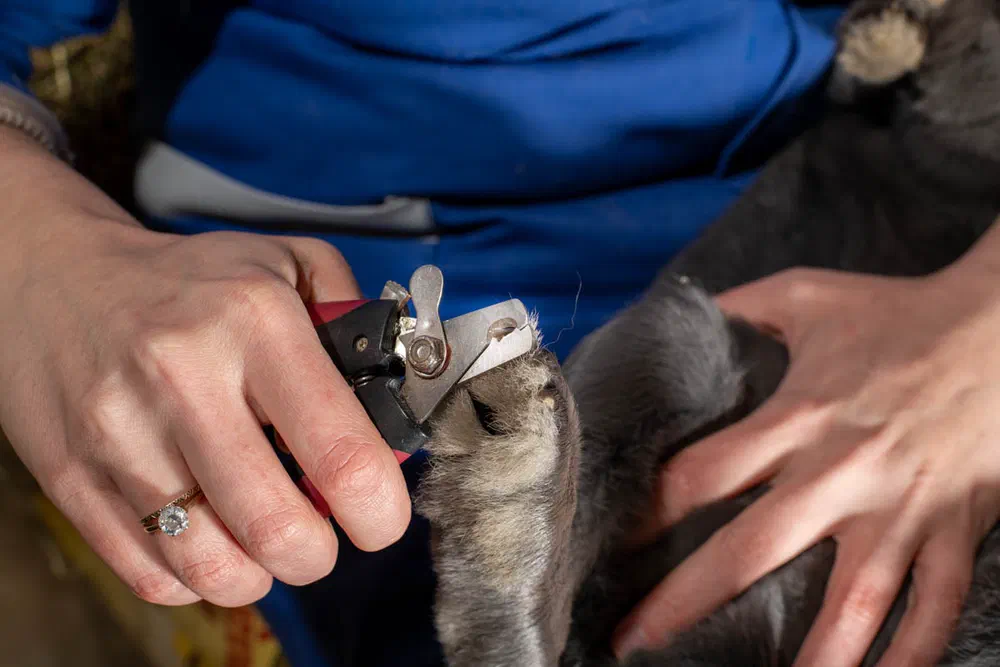
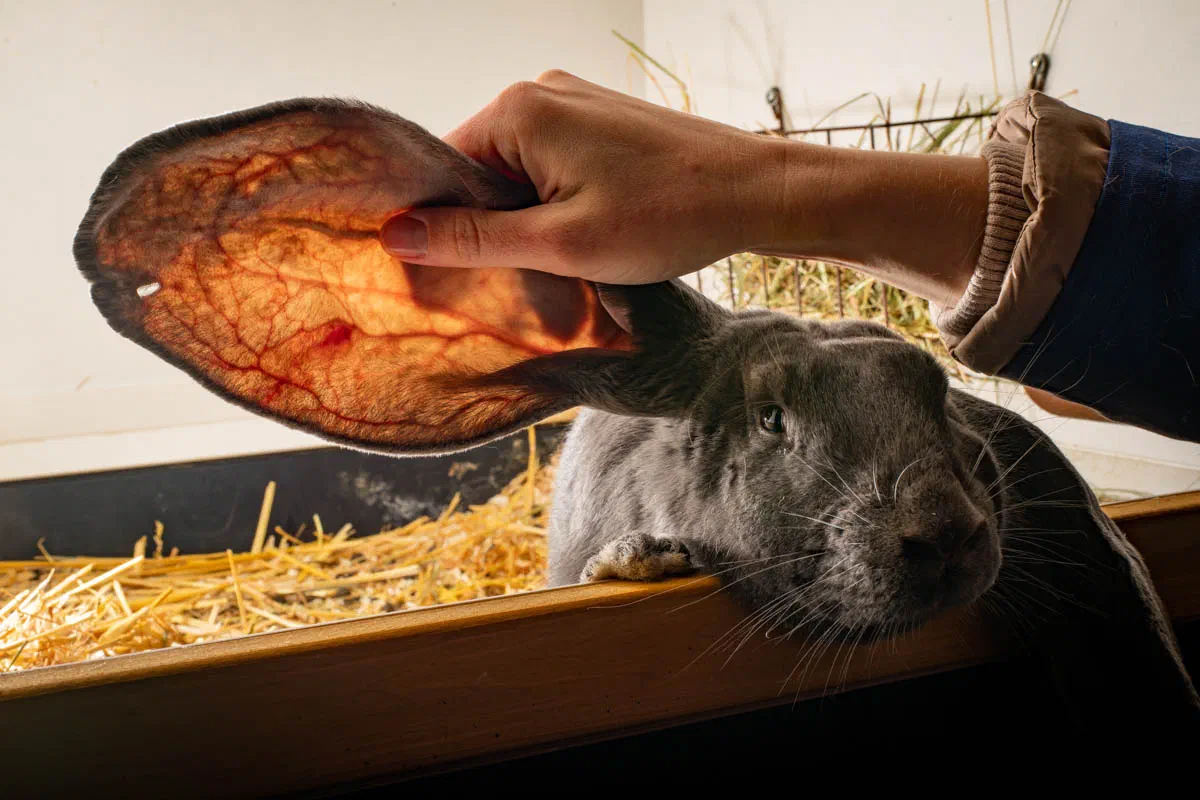
Claw care is an important matter with the English Lop. Everyone knows the needle-sharp claws of young rabbits and how much it hurts when you take the little one out of the hutch and it scratches your hand. In the first weeks of life the ears of English Lops are still very thin and vulnerable, and when the young rabbits romp around the hutch with their siblings, the ears can quickly get injured.
At first it may only be a small wound, but – because the ears grow so enormously – it can then develop into a larger tear or a hole, and the rabbit can no longer be shown. It doesn’t have to come to that!
Regular claw care, ideally from the 5th week of life, can considerably reduce the risk of serious injuries. You don’t need to cut the claw far down; it is enough to just clip off the tip.
Positive side effect: The rabbits get used to claw care early on and then know the usual routine.
The doe also has her claws trimmed once more before kindling, so that she doesn’t injure the babies while caring for the young and the nest.
I usually trim my adult rabbits’ claws every 4 weeks. This is a matter of judgement and sometimes varies, as the rabbits also dig or scratch in the hutch now and then and can wear their claws down that way.
As a tool I use claw clippers for cats. Clippers designed specifically for small animals or even dogs work just as well. What matters is that they are sharp and work smoothly. The tip of the claw should be cut off cleanly – without being pinched, splintered or broken. I advise against using other tools such as pliers, garden secateurs or side cutters.
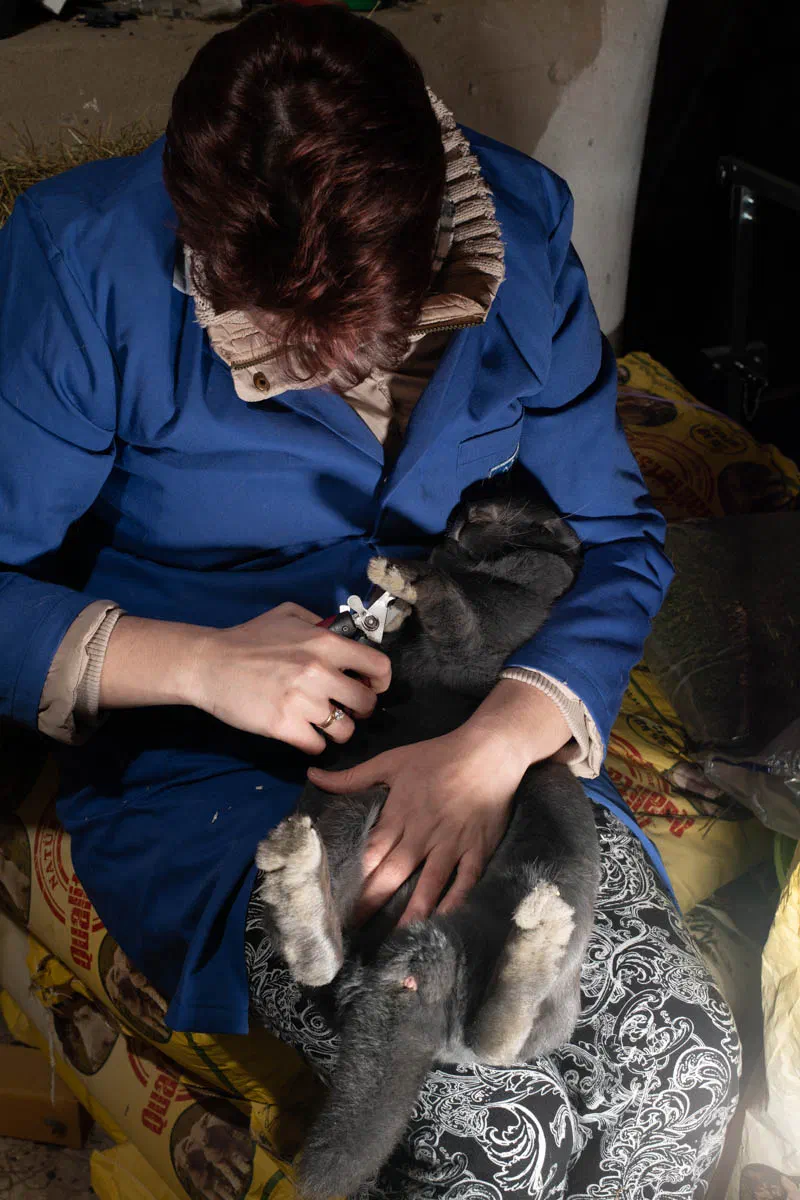
Personally, I prefer to trim my rabbits’ claws sitting down. You are much calmer that way, and this calm carries over to the animal. I lay the rabbit on its back and steady it with my arm; as I am right-handed, I hold it in my left arm, similar to holding a baby.
I place my left hand on the rabbit’s belly to steady it, which has a calming effect and at the same time protects me from kicking hind legs. When trimming the claws on the front legs, you can either move your hand and hold each front leg individually or leave the “steadying hand” on the belly. With very restless or excited animals, I tuck the lower half of the rabbit under my right arm to steady it. Now you can trim the claws safely without the animal wriggling or kicking.
For this job I wear a sturdy long-sleeved coat or work coat in which the rabbits’ claws can’t get caught. Woollen jumpers, loosely knitted tops or fabrics that tear easily would be unsuitable.