Ear care? Sounds strange …
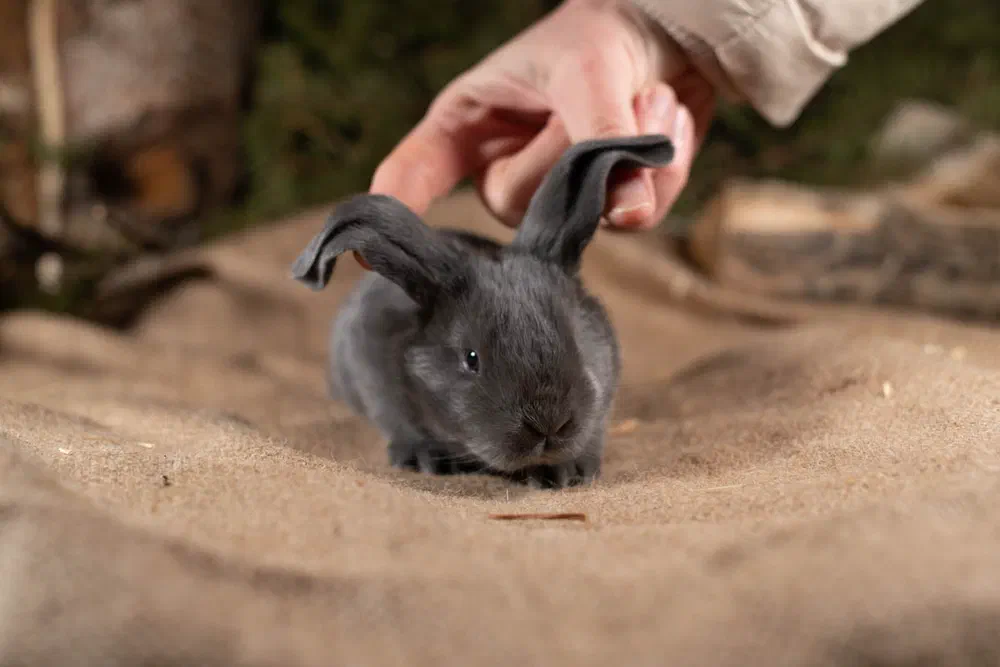
With the English Lop, however, caring for the young rabbits’ ears is a serious and important matter. When the ears are as thin as paper in the first weeks of life and the little one sweats (the ears are a rabbit’s air conditioning), the insides of the ears become damp and can produce a secretion. This secretion appears as a whitish-yellow coating that can make the ears stick together. If you don’t notice this process in time, the ear becomes inflamed and open wounds develop. The animals then stop eating and sit listlessly in the hutch. Your first guess would be a digestive problem – but in the English Lop, sticky ears can also lead to this condition.
The sticking can also occur on one side only, so when checking the ears you should always examine both sides.
Depending on the size of the litter, I either take each youngster out briefly one at a time, or I feed the young and then check them one after another at the bowl. I take each ear in my hand individually and run my thumb inside the ear from the base upwards to the tip. This is very quick, and it doesn’t bother the animals either. It really works best when the young are eating and busy.
If a youngster shows this milky, sticky coating inside the ear, take it out of the hutch for further treatment. I then take a dry, soft cloth and wipe the coating out of the ear. After that I clean the ear with a little warm water to remove all residue. Finally, the ear is dried with a soft cloth or towel and – if it is already slightly reddened – dusted with a little baby powder or wound powder. That should be enough for the time being, but you should check this animal a little more closely over the following days.
Whether rabbits tend to have damp ears sometimes varies from litter to litter. Sometimes it doesn’t happen at all in a whole litter – and sometimes several have it at once. That makes it all the more important to always check the whole litter and to feel through both ears.