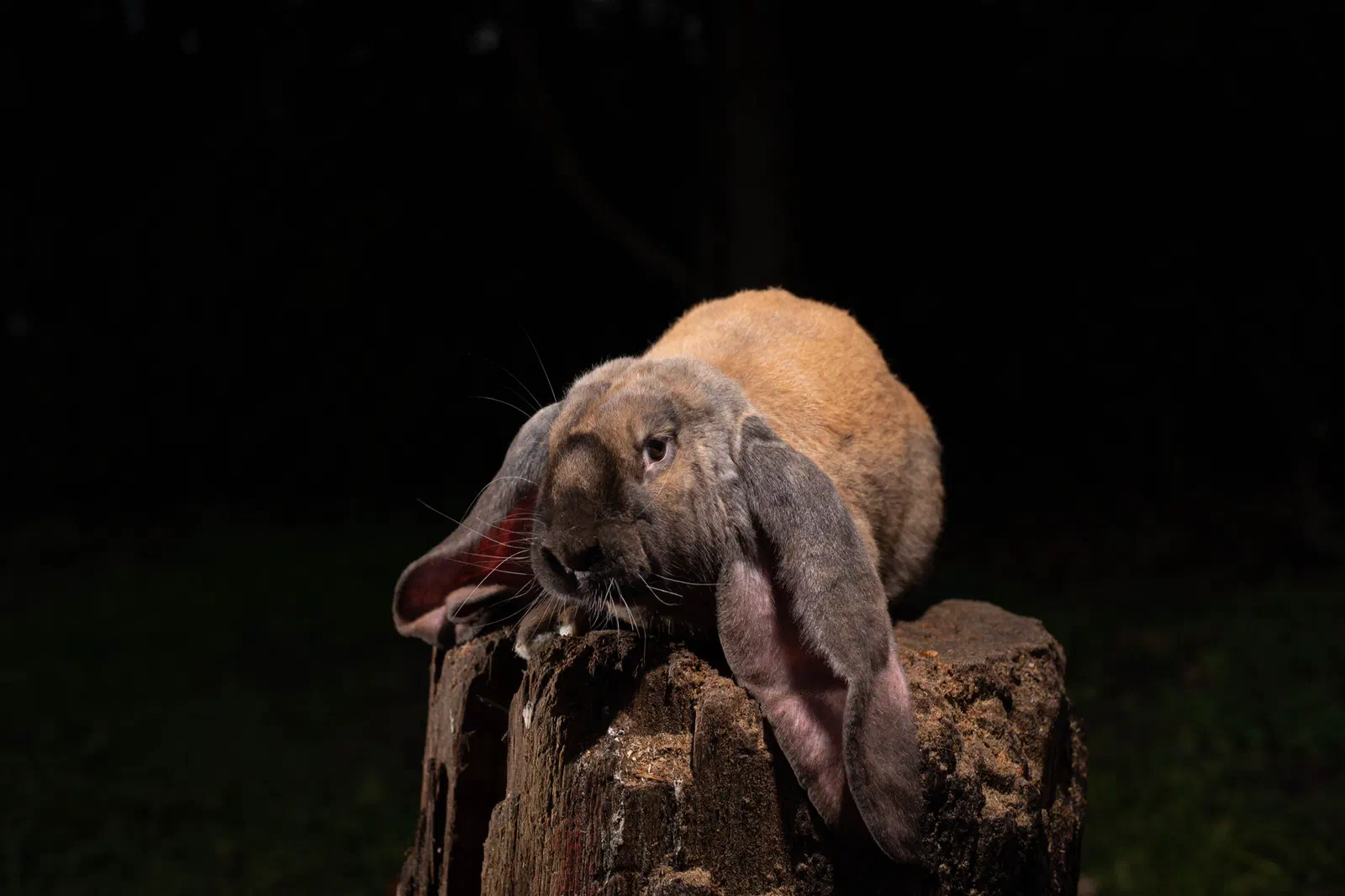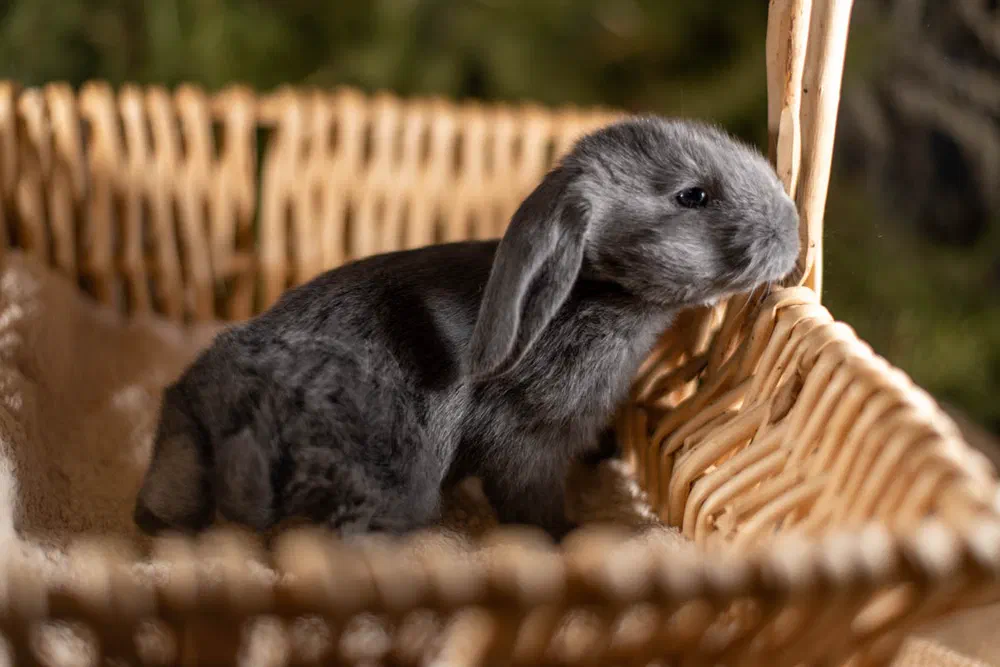
In this article I would like to take a closer look at the main breed characteristic of the English Lop, its ears, and how they develop over time. Please don’t be surprised if I digress from the main topic here and there, for example on claw care or bedding. These are simply important parts of, and belong to, the healthy development of the ears.
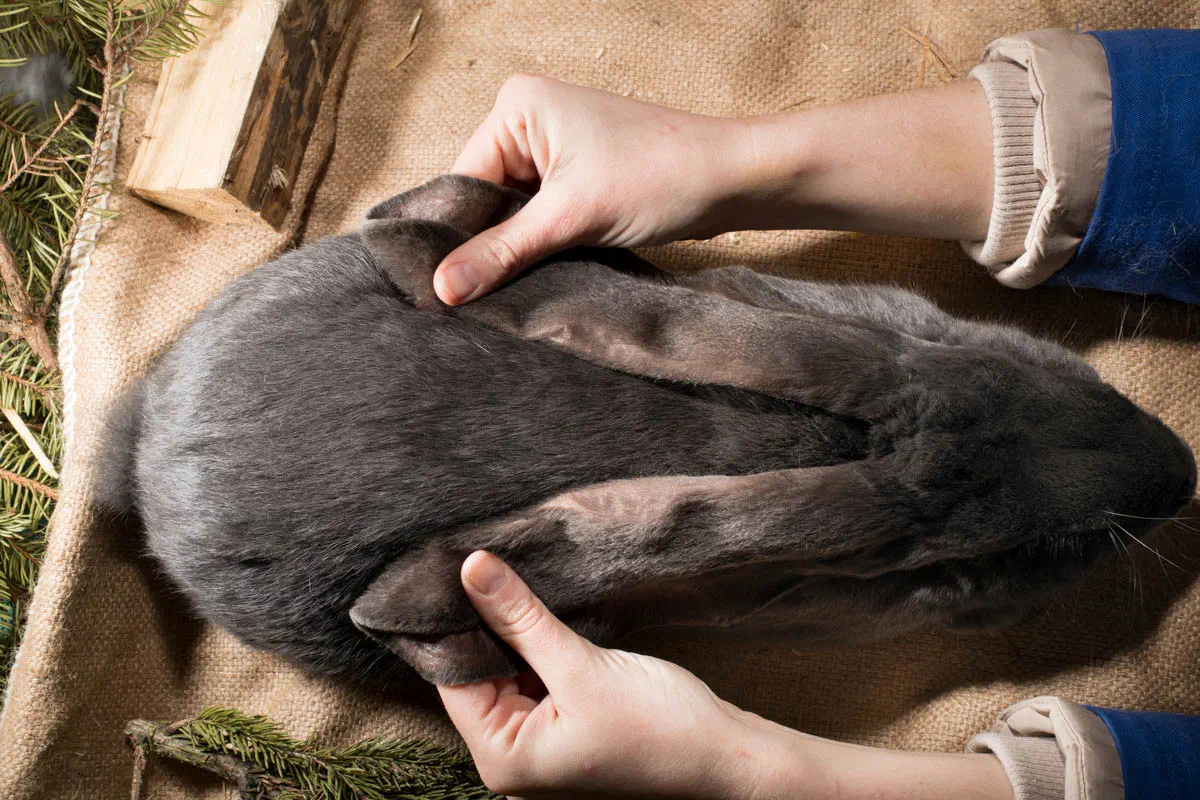
In the first weeks of life, the ears of English Lops grow enormously. You could almost say you can watch the little ears grow day by day, because the full ear span of the targeted 60 cm is usually reached by the 5th or 6th month of life. After that the ear span changes only minimally, due to the later development of the head (width of the forehead in adulthood).
A good tip or rule of thumb to make sure the ears will one day reach full length is to check whether the ear tips reach down to the rabbit’s knees. If the tips go beyond them: very good growth. If they don’t reach the knees: weak ear length.
But let’s start at the beginning:
The English Lop is the only lop breed whose ears “drop” from birth. This means the ears hang down from day one and are not carried upright later on either, when the young leave the nest. There are of course exceptions, for example if there are anatomical defects.
In other lop rabbits, the young have upright ears at first and then (depending on the breed) let them “drop” after a few weeks. The young rabbits lower their ears further and further, at times carrying them horizontally (little “aeroplanes”), until they finally hang down completely.
In the first days of life, the ears of an English Lop youngster are thick and fleshy. As the fur grows and the youngster gains weight, the ears grow longer and longer. At about 4–5 weeks the ears are very thin and delicate. From this point on you also have to start checking the youngsters’ ears and caring for them actively.
From the 5th–6th week, when the young are already taking an active part in life in the hutch, the changes to the ears become more and more visible. Over the following weeks the ears become longer than the rest of the rabbit’s body, and the young now also begin to groom their ears intensively themselves.
The topic “Claw care for young rabbits” is mentioned here again only for the sake of completeness. The hutch or pen should be thickly bedded with straw; a layer of soft, absorbent wood shavings is recommended underneath the straw. Thick bedding is important so that the youngsters hopping around don’t slip on a smooth floor (as in a hutch with a droppings tray) and injure their ears. Thick bedding also provides enough warmth, which is necessary for better ear growth (topic “Why warmth makes sense for better ear growth”).
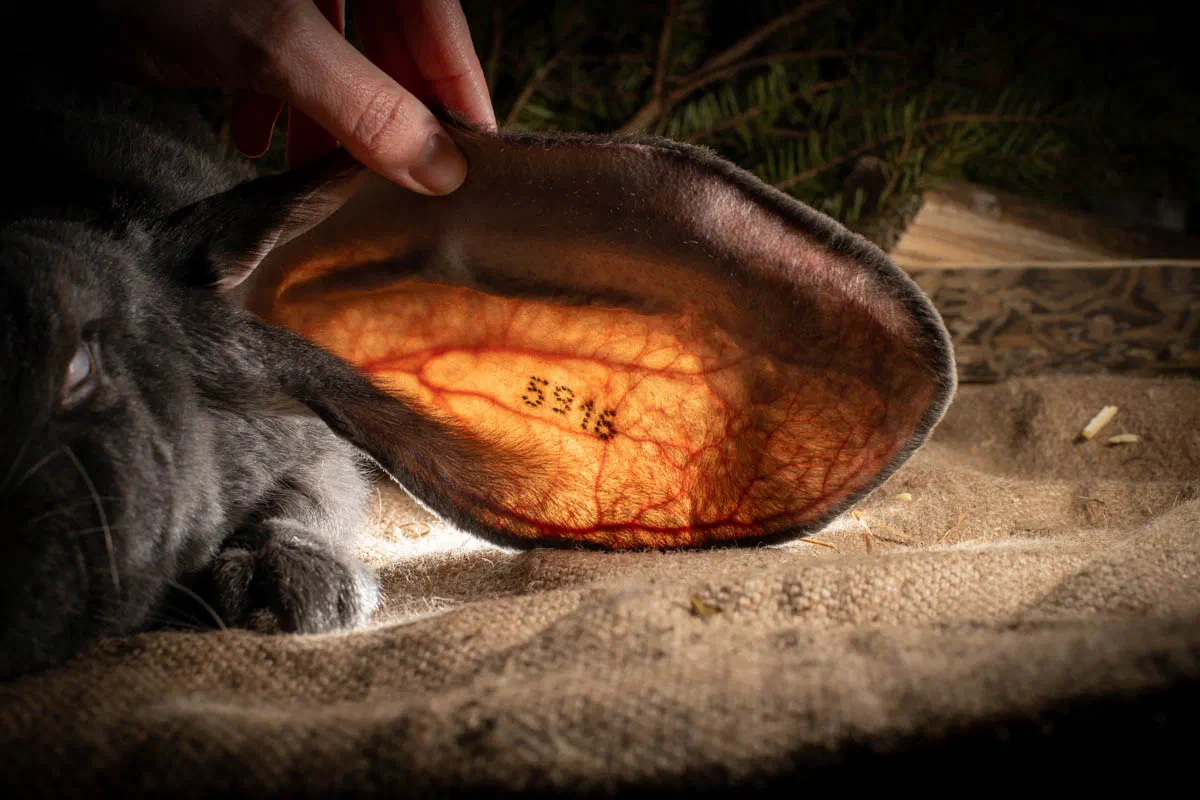
Now it is also time to have the young rabbit tattooed (for club breeding). By now a large network of veins has formed in the ears; it runs through the whole ear and is easy to see when you hold the ear up to the light.
The larger and more pronounced this network of veins, the better the blood supply to the ear (warm) and the softer the ear leather feels. Ears with a poor blood supply and a weaker network of veins feel stiffer and more rigid and don’t hang down nicely and loosely.
By the 6th month of life the growth of the ears is complete. If by then the rabbit has not come close to the measurement (< 57 cm), it will not reach 59 to 60 cm later either. There is still some leeway in the phase when the head becomes more pronounced, especially in bucks. I don’t want to say here that animals with < 57 cm must be culled straight away. It is simply my experience that from this age the ears don’t make any big jump in length. You can certainly still show animals with an ear span of around 58 cm, but you then have to expect deductions (see the article “Measuring the ears correctly”).
For breeding, however, you should use foundation animals with the full measurement, since after all this is the number one breed characteristic of the English Lop.