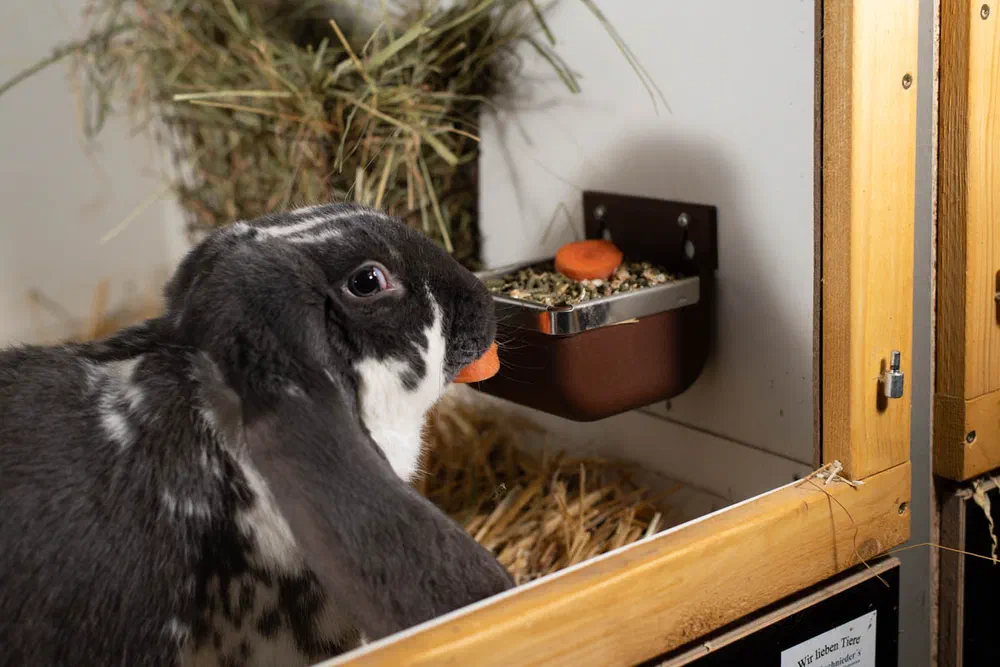
The English Lop is a very active rabbit breed. Personally, I find the hutch sizes prescribed by the ZDRK, Germany’s national association of pedigree rabbit breeders – a floor area of 80 x 80 cm and a height of 65 cm – too small for this breed. More space does mean more bedding and manure and higher costs if you use droppings trays, but it also means a more vital rabbit. After all, the animals spend almost their entire lives in their individual hutch (when kept singly), so it should be as generous as possible.
My rabbitry has hutches in two sizes. The hutches made by a rabbit hutch manufacturer measure 80 x 100 cm and are 65 cm high. Our self-built hutches, on the other hand, have a floor area of 100 x 130 cm and are 70 cm high. Only the bought hutches have a droppings tray; the self-built ones have a built-in slope with a urine drain so that no standing moisture builds up. In addition, the hutches without a droppings tray are painted with silo coating, which protects against moisture and seals the surface.
In my opinion, a resting shelf is very worthwhile! As mentioned at the beginning, the English Lop is very active. The animals partly use the shelf as “gym equipment” and jump or run over it. This has a very positive effect on the rabbits’ vitality and agility. They also use the resting shelf to sleep on and like to let their ears dangle.
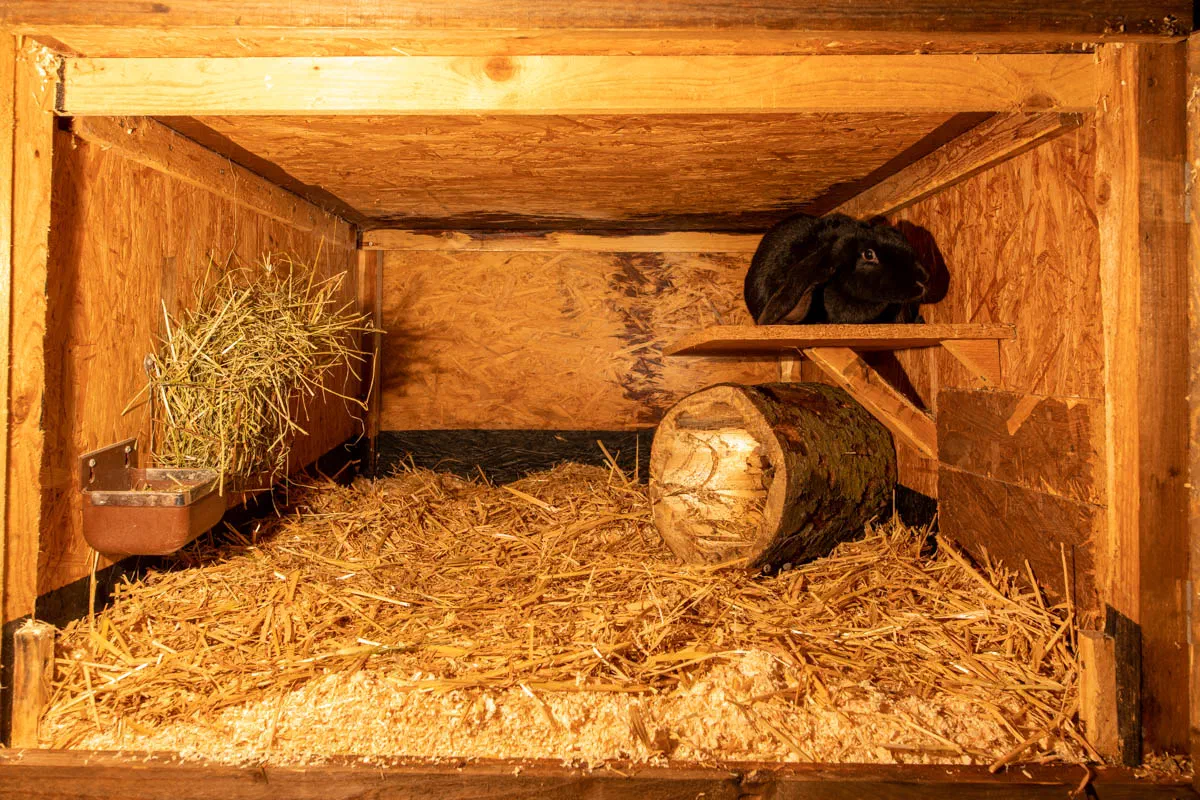
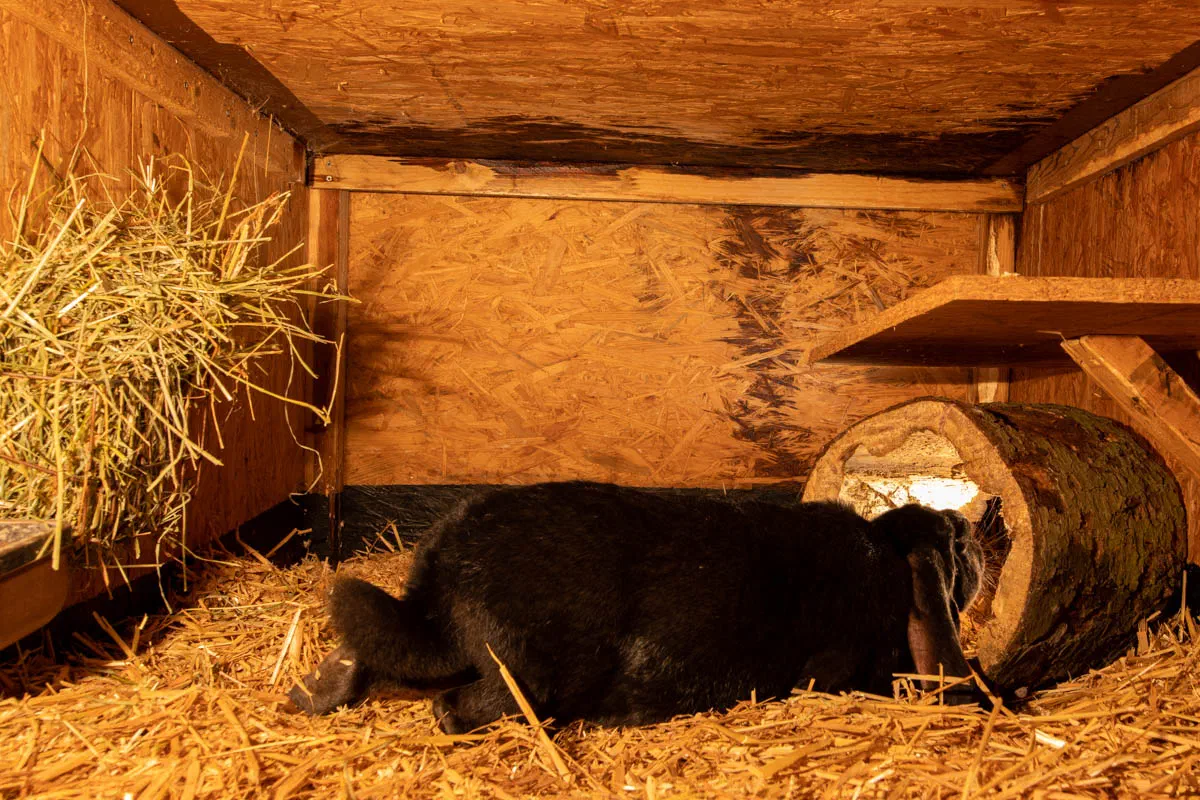
In some hutches I have also added a hollow tree trunk. Its main purpose is to keep the rabbits busy (nibbling, gnawing, sitting on it, scratching inside it, …), but it also serves as a windbreak and a place to hide.
A rack for hay and grass fixed to the wall keeps the hutch tidy and clean. As drinkers I use 1-litre nipple drinkers; they are filled with fresh water every day (!) and cleaned every 3–4 weeks.
In winter, when the drinkers are frozen, I use cage cups or bowls (made of glass or ceramic) and give water 2–3 times a day. It is a good idea to take the nipple drinkers down when frost is forecast (beforehand). That is something I have had to learn the hard way more than once myself …
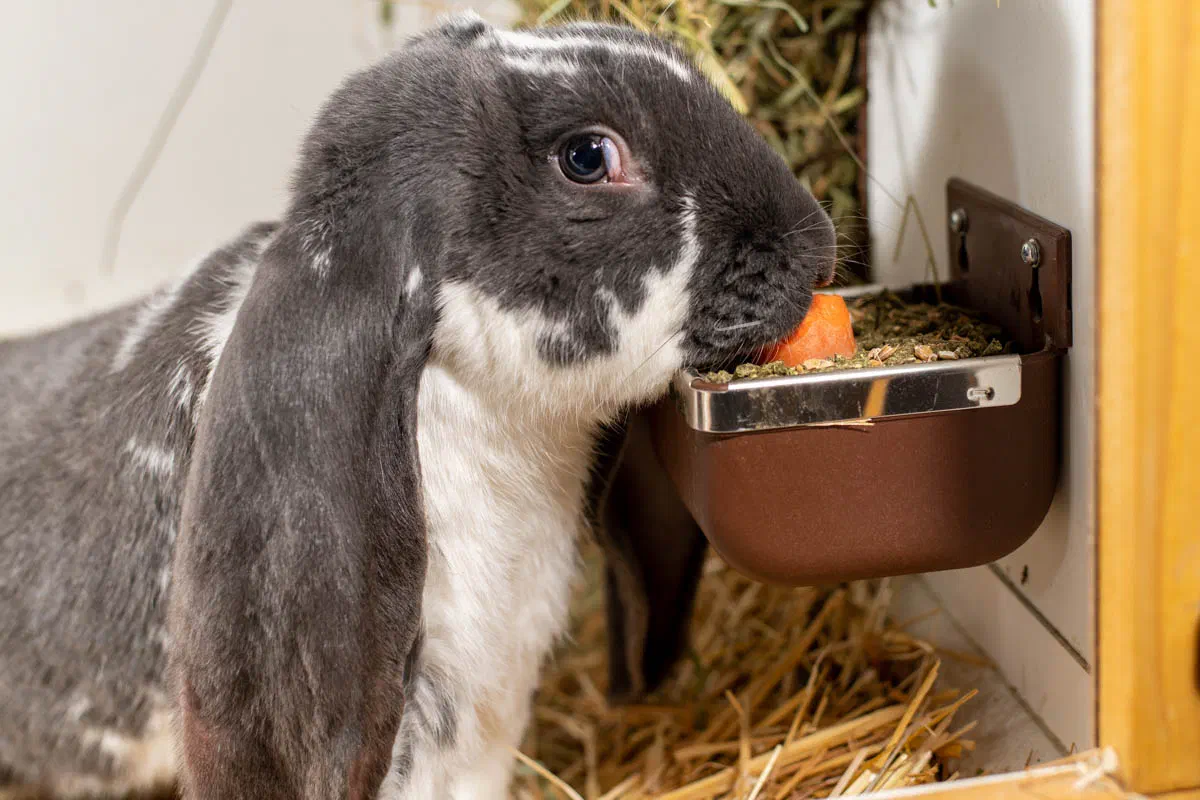
I feed the dry food in wall-mounted bowls. I use a model with a bite guard and a capacity of 600 ml. The bowls are fixed about 20 cm high in the hutch so that the animals stretch up to them properly. This leads to better shoulder and neck muscles and also gives them good ground clearance on the judging table.
For youngsters that are still too small to eat from the raised bowl, I put an extra bowl on the hutch floor. As soon as they are big enough to hold on to the wall bowl with their front legs, they are switched over to it. The mesh of the doors should be hot-dip galvanised and as fine as possible to keep out rodents.