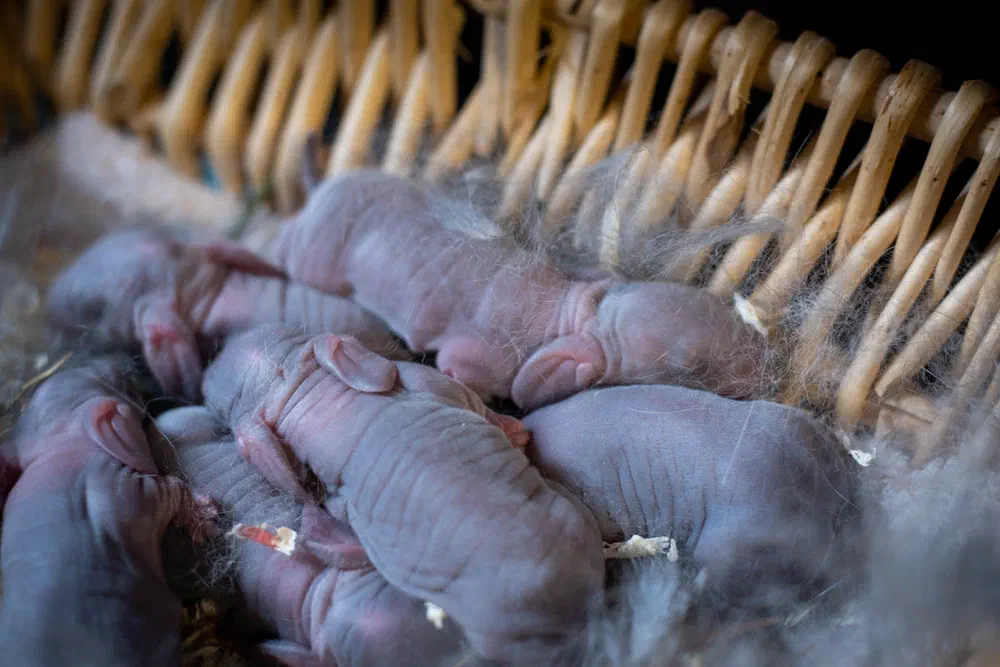
Opinions differ widely on this topic. Some say “Check right after kindling.” or “It’s enough to look on day 3 …”, and others again say “I stick my nose into the hutch and ‘smell’ whether everything is all right – nature takes care of it.”
The way I do it – and I have been doing it for 20 years – is to check the nest as early as possible. If the doe has kindled during the night or early in the morning and I notice the nest in her hutch on my morning round, then the nest gets checked. First I take a calm look at the doe. She may not have finished giving birth yet, or she may still be busy with the aftercare, in which case I give her more time to put everything in order.
The aftercare after the birth includes, among other things:
- eating the afterbirth: this is very important for the mother, because it contains valuable minerals and trace elements that the doe needs to take in after the birth
- building the nest: some does only build their nest once they have already kindled. To do so, they pluck soft fur from their belly, hindquarters and chest. At the same time this exposes the teats, so that the young can find them more easily.
- cleaning and tidying the hutch: the doe removes traces of the birth (blood, amniotic fluid, …) and puts everything back in order.
It is important to give the doe this time, because the birth is painful and exhausting for her too. Any additional stress for the animal should be avoided.
If I then find a nest covered with fur (wool) in the hutch and the doe has finished all the aftercare and seems reasonably active, I carry out a nest check.
Important first: Your hands must be clean and as odourless as possible. That means you should not have washed your hands with a strongly scented soap beforehand, or put on hand cream. You should also have a container ready in advance to put the young in during the check. The container can be, for example, a small cardboard box, a basket or a bowl, into which you put some bedding from the doe’s hutch and some wool.
If the doe is calm and doesn’t mind you reaching into her nest, she can stay in the hutch. If she is restless or aggressive, it is better to take her out of the hutch and offer her some vegetables or fruit to keep her busy. If the doe stays in the hutch during the nest check, you can also offer her some fresh vegetables or fruit as a distraction and a treat.
Now to the nest check itself:
- rub your hands with some of the mother’s bedding to take on the doe’s scent
- carefully remove the wool from the nest and set it aside
- take the young out of the nest one by one and put them in the prepared container
- empty the nest completely, removing any dead young and remains of the afterbirth
- remove soiled bedding around it (for hygiene reasons)
- check the litter for injuries and count them
- put all the young back into the nest and cover them with wool
- record the date of birth and the litter size and, if necessary, further information (stillborn, given to a foster doe, …)
Finally, put the doe back into the hutch and check the level of the water bottle or water bowl. On the day of kindling the doe drinks a lot of water, as she lost plenty of fluid during the birth. To support her, you can add minerals to the doe’s water or give her lukewarm tea (e.g. fennel tea or nursing tea).
Every few days I check the nest to see whether all the young are being suckled evenly or whether there are differences and I may need to put some of the young to the doe separately to suckle.
If the doe has good mothering qualities, you don’t need to intervene any further and can leave everything to her. As a breeder, you now have to pay particular attention to good hutch hygiene and enough bedding, and supply the doe with important vitamins and minerals through her feed (there will be a separate article on this).