Franziska SprengerEnglish Lops · Conservation breeding

Knowledge

The “crown” of the English Lop

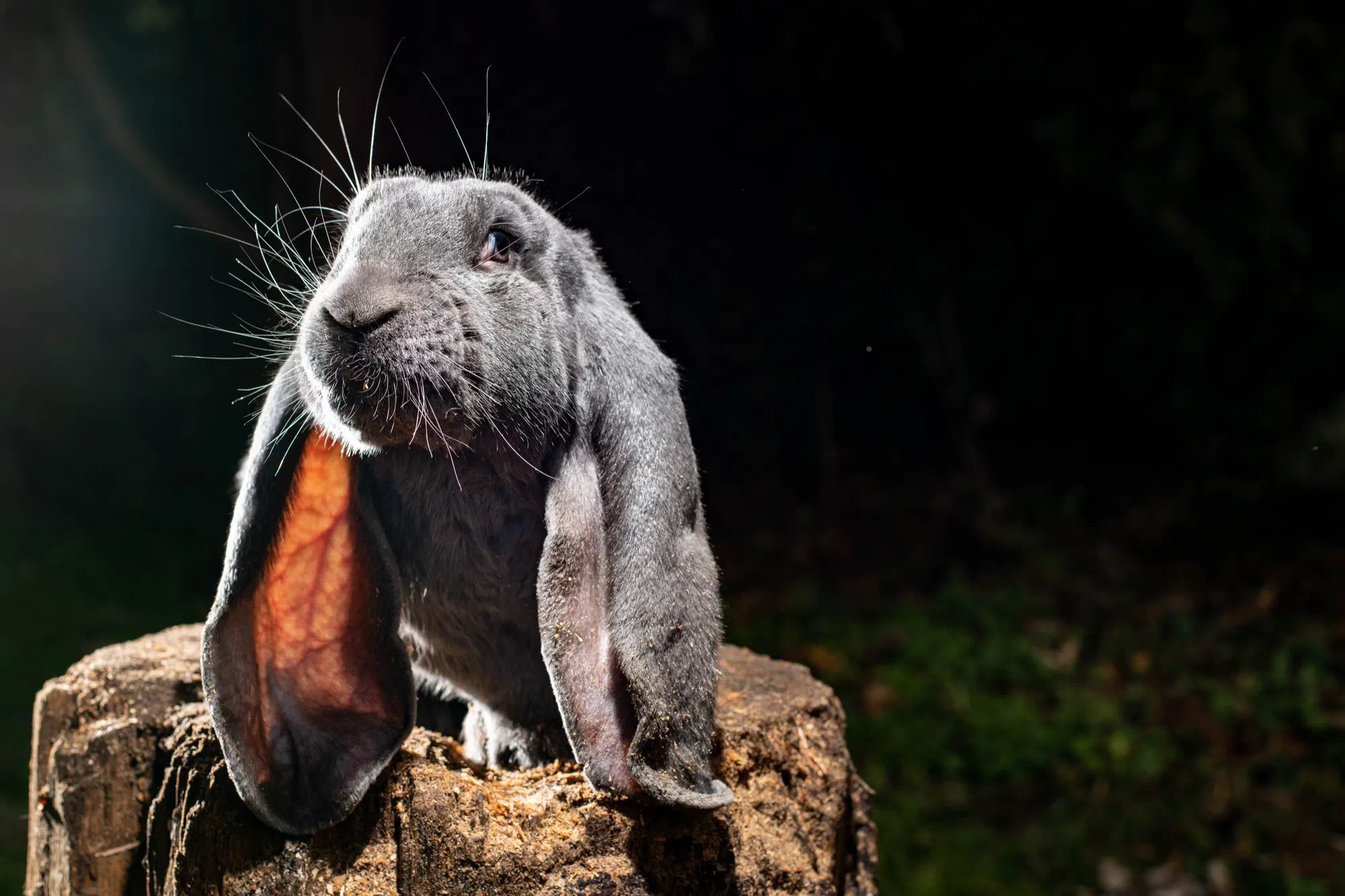
Blue English Lop on a tree stump against a dark background, its ears hanging with the ear openings facing forward, one glowing in the backlight

In the other lop rabbit breeds (whatever their size), the ears spring from a strongly pronounced crown. From there the ears are carried downwards in roughly a horseshoe or U shape, with the openings facing the head. The English Lop is the only lop breed that has no crown, because it carries its ear openings facing forward, which goes along with an anatomically different “ear attachment”. Only the fur in this area stands up in the form of a “mohawk”, giving the English Lop its typical “hairdo”. This can be more or less pronounced and is disregarded in judging. It would be wrong to assess this feature as “uneven hair length on the head” and to penalise the animal for it. I have also read the remark “weak crown” on a judging card, but as described at the beginning, that is anatomically impossible and goes against this anatomically special breed type.
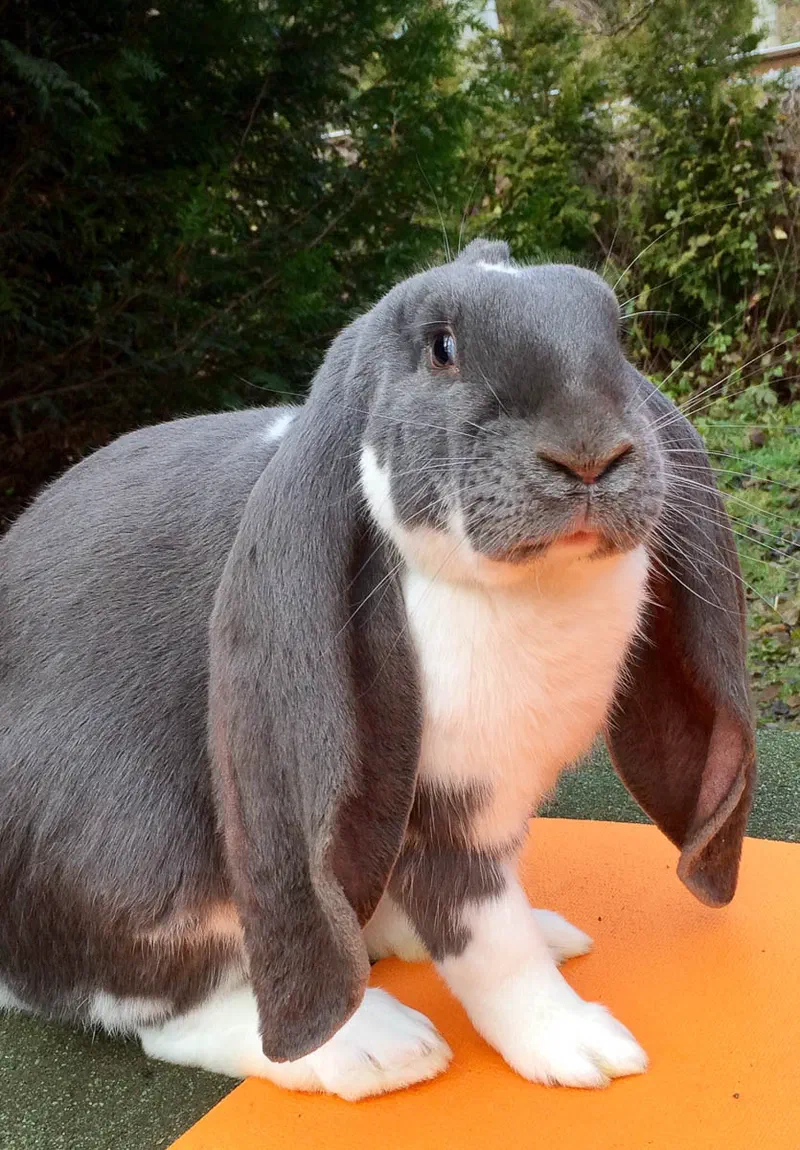
Blue-and-white English Lop seen from the front on an orange mat, its long ears hanging straight down, the ear openings facing forward

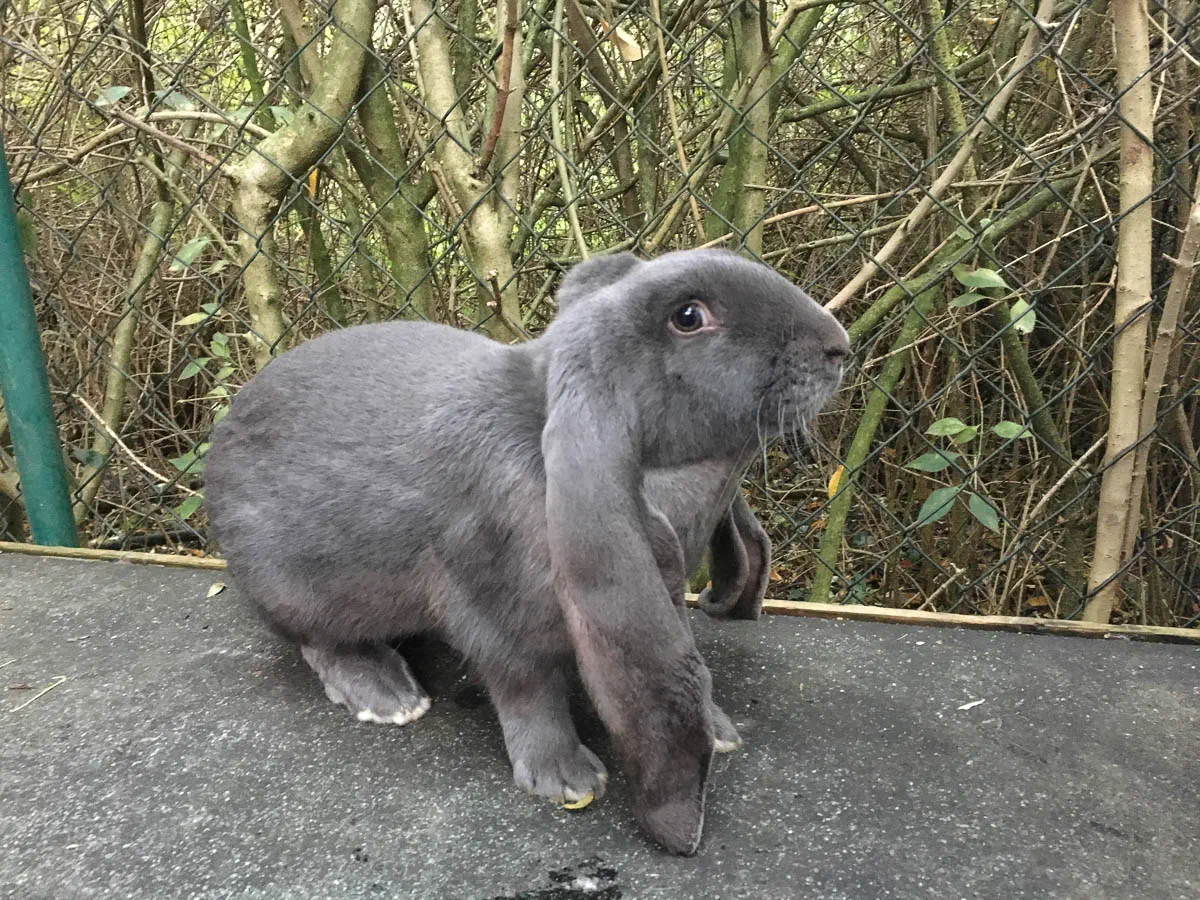
Blue English Lop in profile in front of a wire-mesh fence, with a curved bridge of the nose, a long head and a loosely hanging ear
What also stands out in this animal is the nicely curved bridge of the nose and the relatively long head. This animal also shows very good ear carriage – loose, with the ear openings facing forward.

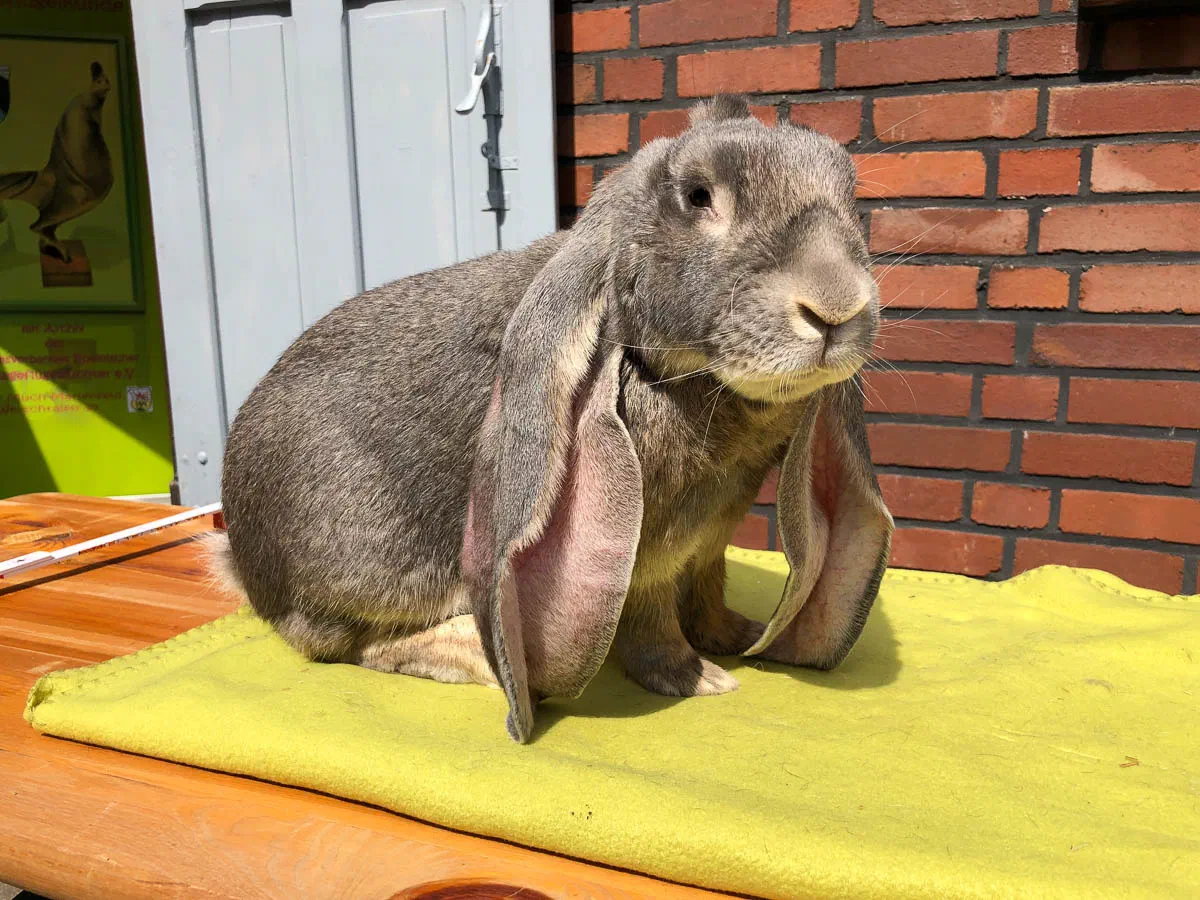
Blue-grey English Lop sits on a green blanket in front of a brick wall, both ears hanging down with the ear openings facing forward
In the blue-grey, you can see particularly clearly the ear openings that are truly carried forward, without a crown. Even compared with the blue broken, this is especially striking.