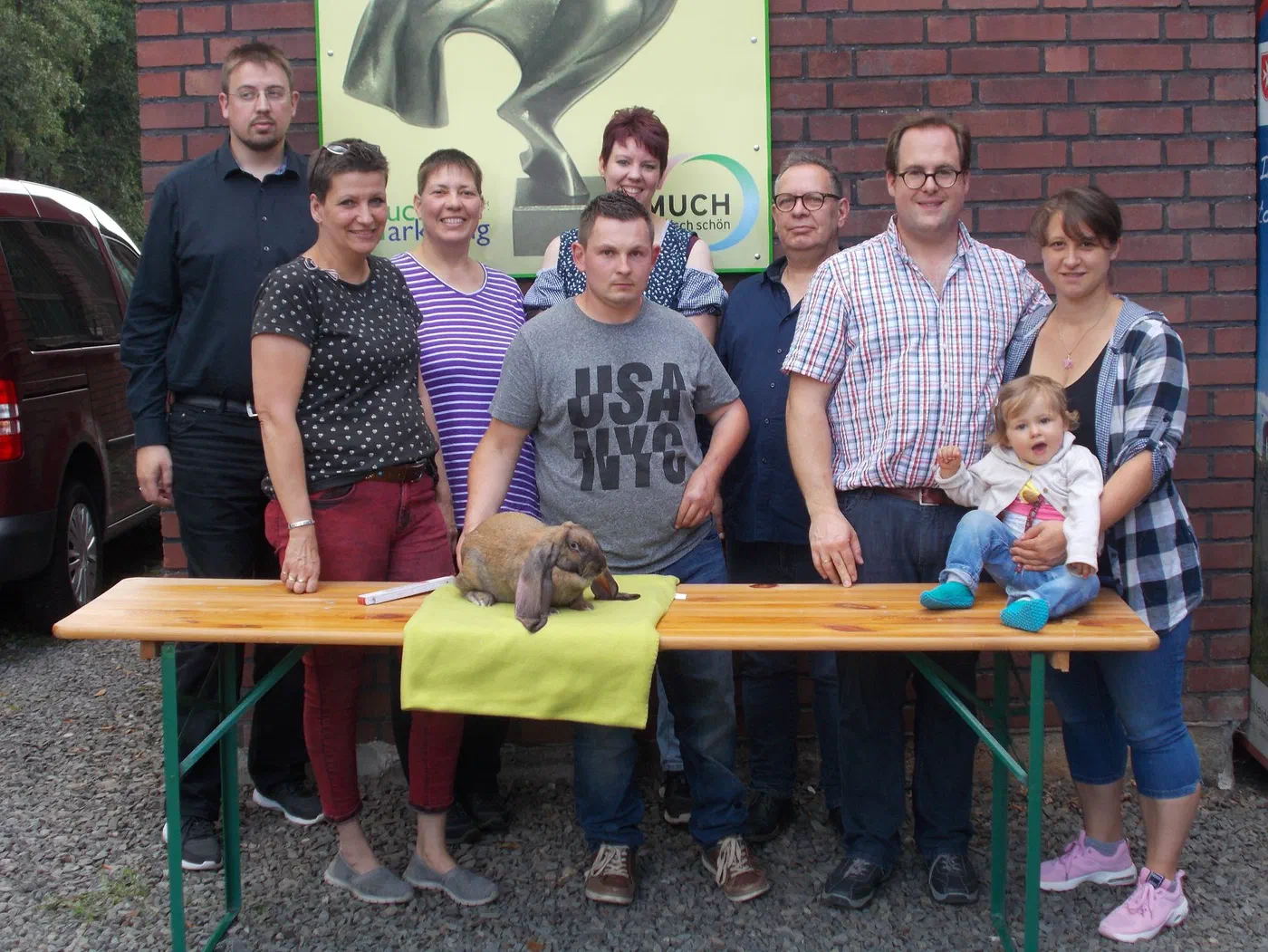
What could be more fitting, as breeders of a breed so rich in history as the English Lop, than to travel back to its heyday – namely the beginning of the 20th century? Back then our breed was still right at the top of the popularity scale, in second place behind the giant rabbits. On the weekend of their annual meeting (19–21 July 2019), the members of the IG Englische Widder, the international English Lop interest group, strolled through this era at the LVR open-air museum in Lindlar. On the museum grounds of around 30 hectares, with numerous historic buildings and beautifully laid-out fruit and vegetable gardens, even the fields are worked and harvested true to the original with old farming techniques, and representatives of old livestock breeds live on the pastures and meadows. Yes, a place like that warms your heart.
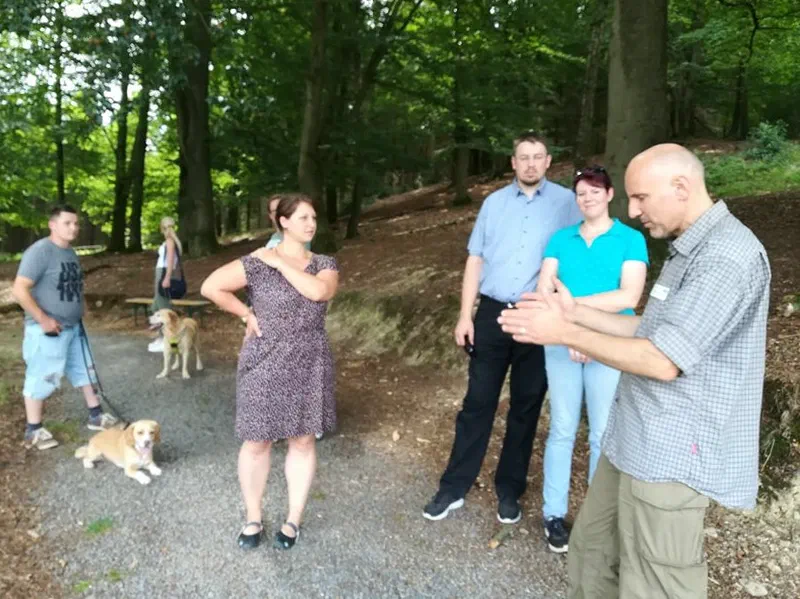
The tour led by our IG member Kristian Verdoodt took us through numerous buildings from bygone times in the Bergisches Land. But it wasn’t just about looking and marvelling – joining in was on the programme too. Among other things, we were able to make a rope ourselves in the old rope works in the style of the 1920s.
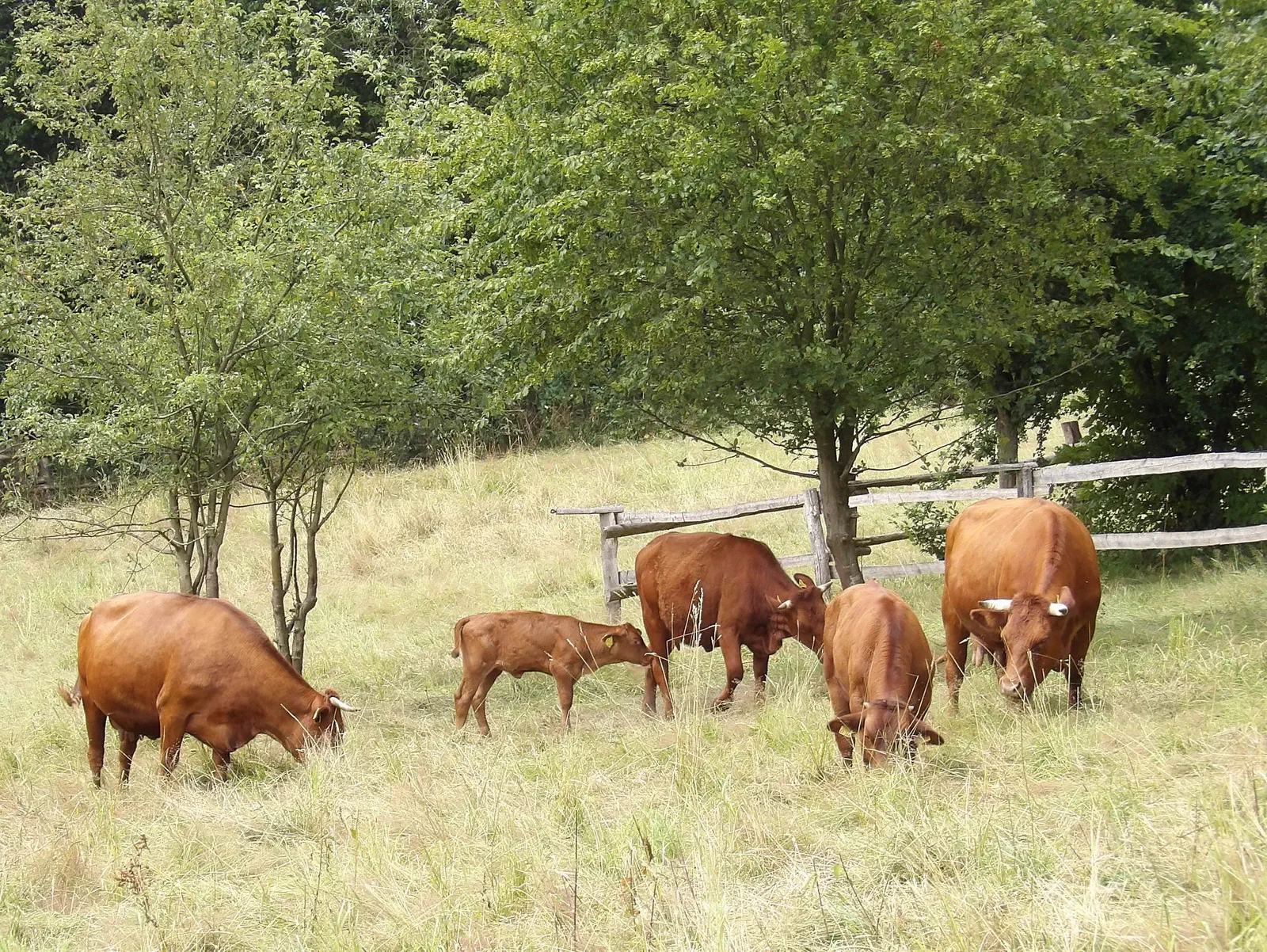
True to the motto “Extinction forbidden”, which we English Lop breeders know all about, there are also several endangered domestic breeds on the museum grounds, among them the Rotes Höhenvieh (red hill cattle), the Deutsches Weideschwein (German pasture pig) and the Weiße Deutsche Edelziege (German white goat). On a separate tour led by a farmer, the characteristics and advantages of these old breeds are examined more closely, along with why they count among the endangered breeds today.
Given the sheer size of the open-air museum and the buildings, open spaces and special exhibitions on offer, you could certainly have filled a whole week. Unfortunately we had to leave the grounds in the afternoon, but one or other of us will surely come back and do other tours of the museum village.
In the evening our AGM took place. However, as many members were unfortunately unable to attend because of holidays, illness or other reasons, the session became a board meeting, and so at least the most important points of the past year and the coming months were discussed at length. A minute’s silence was held by those present for Christian Blaser, a member and honorary member of the Swiss English Lop club, who died in June 2019.
The 1st spokesperson, Phillip Fritz, gave his report. Some of his show reports on the past major show events had already appeared in print. Claudia Gerst, now in her new role as treasurer for one year, gave her report on the IG’s finances. This was followed by the report of the 3rd spokesperson, Franziska Sprenger. She presented a comparison of the young stock census returns over the past 7 years: which colour varieties are well established within the IG and which have declined sharply. The first positive news is the result of 621 youngsters reported in 2019, from 21 members in 18 colour varieties – the highest level in recent years! She then went into each of the colour varieties in a little more detail. Afterwards, show reports and contributions sent in by IG members were read out and discussed, including an important message from our long-standing member and judge Hans-Günter Flath on the finer points of measuring the ears correctly at shows and how this should be handled better in future. There will be a separate article on this in the rabbit magazine, in which these finer points will be set out in an illustrated guide.
As of the reporting date of 1 August 2019, the IG has 47 members. We are pleased about three new members, but unfortunately also have 2 departures to report. The 2020 meeting should and will take place in the Bavarian state association (LV Bayern). Due to personal circumstances, it was decided in agreement with Korbinian Schmid to hold the 32nd meeting in 2020 at Franziska Sprenger’s, not in Peiting but in Franconian Switzerland. Because of the high temperatures expected in summer, the 2020 meeting will not take place until September. The organisers hope that this way participants will bring a few animals along to the event, so that a broader range of colours can be shown to interested “non-English-Lop breeders” and the individual lines can be compared with each other better.
Afterwards, under “any other business”, participation in the German national rabbit show was discussed.
On Sunday the members met at the poultry breeds museum of the Rhineland regional association (LV Rheinland) in Much. As there were some new faces among those present, the 1st spokesperson gave a presentation on the history of the English Lop, its distribution and the current state of affairs, analysing each colour variety explicitly. Even for long-standing breeders this excursion into the past was very interesting. As is tradition, the stock assessment then took place. New member Jimmy von Krüchten brought some lovely youngsters in the Thuringian colour variety for assessment. The beautiful dark markings, on the flanks too, were striking. Animals in black, black-and-white, blue and blue-grey were also discussed. The blue-grey animal was an adult of Dutch descent.
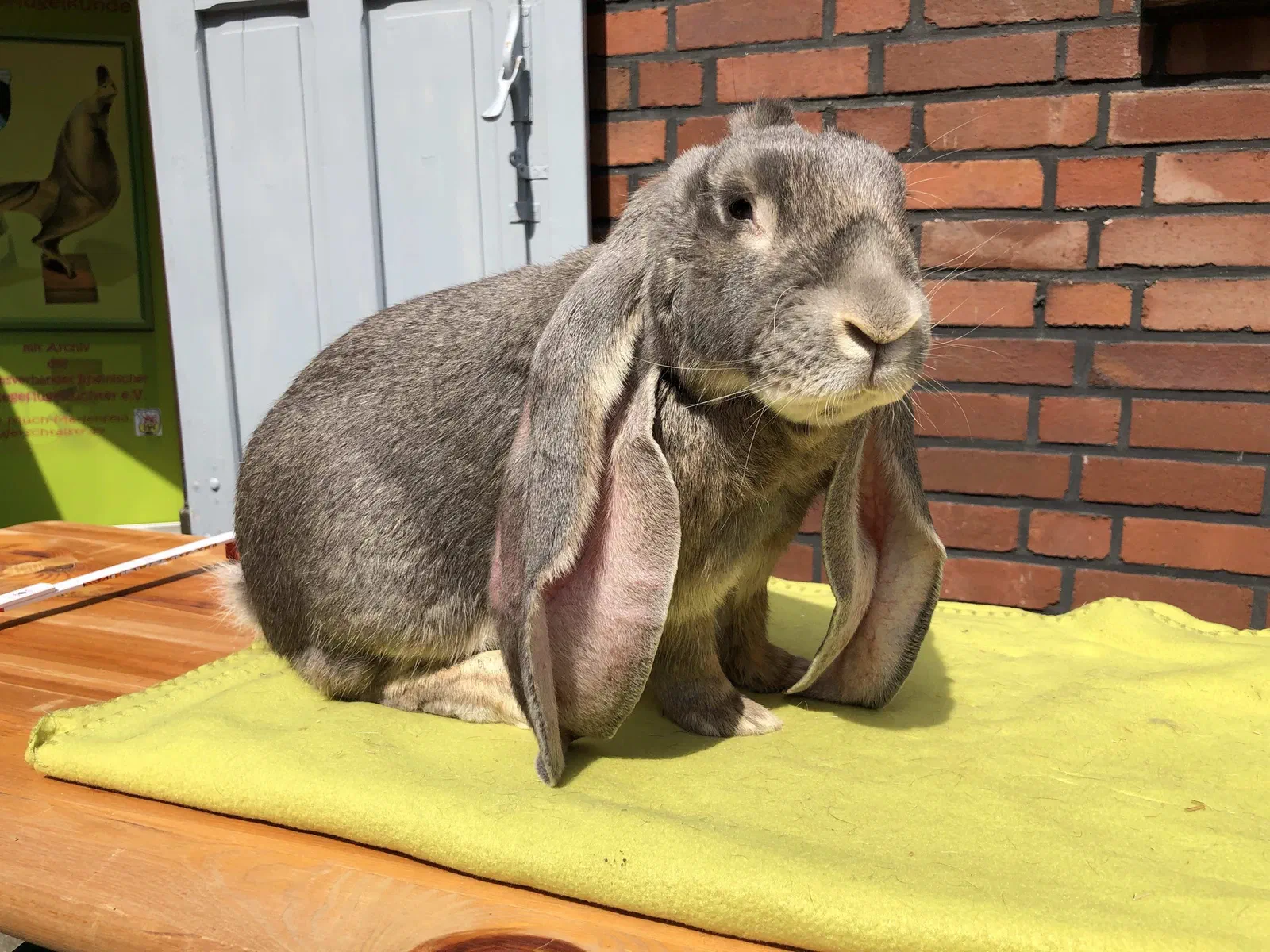
This buck was a feast for the eyes, and more than one of those present would certainly have liked to borrow him.
At this year’s meeting, too, some animals changed hands and can now pass on their genetics in new surroundings. That is what the IG is there for above all! Animals of a colour that one breeder produces – but doesn’t necessarily need in their own breeding – don’t end up being slaughtered.
Animals are exchanged among us and stay in breeding. This is vital for survival, especially for the very rare colour varieties of our breed!
With breeder’s regards, and looking forward to welcoming you to the 2020 meeting, yours, Franziska Sprenger